The Scarlet Oak is a deciduous tree that is native to the eastern United States. It is found in every state east of the Mississippi except Florida, Iowa, and Minnesota.
The Scarlet Oak prefers dry, sandy, and acidic soils and can grow to eighty feet in height. It gets its name from the deep red color its leaves turn in autumn. It is used as an ornamental tree because its wood is of an inferior quality not apprpriate for furniture.
http://en.wikipedia.org/wiki/Scarlet_oak
Sunday, July 22, 2012
Catalpa
The Catalpa tree is a deciduous tree native to North America, The Caribbean, and East Asia. It is sometimes called a cigar tree because it produces a long slender fruit that resembles a cigar.
The Catalpa tree prefers full sunlight with moist soil and grows to seventy feet in height. The wood is very soft and the tree is used as shade and bird habitat. It is also grown as food for a caterpillar that is in turn used as bait for sport fishing.
http://en.wikipedia.org/wiki/Catalpa
Black Locust
The Black Locust is a tree native to the southeastern United States, but has since spread to every one of the lower 48 contiguous states except Arizona.
The Black Locust is a deciduous tree that prefers dry to moist soils, especially limestone soils. It grows best in areas that have been disturbed like roadsides, woodlands, and developments. It grows to around eighty feet in height and lives to around one hundred years of age.
The wood of the Black Locust is resistant to moisture and rot, making it a valuable wood for flooring, paneling, and watercraft. It is especially valuable when used as fence posts and fence rails.
http://en.wikipedia.org/wiki/Black_locust
The Black Locust is a deciduous tree that prefers dry to moist soils, especially limestone soils. It grows best in areas that have been disturbed like roadsides, woodlands, and developments. It grows to around eighty feet in height and lives to around one hundred years of age.
The wood of the Black Locust is resistant to moisture and rot, making it a valuable wood for flooring, paneling, and watercraft. It is especially valuable when used as fence posts and fence rails.
http://en.wikipedia.org/wiki/Black_locust
Yellow Poplar
Yellow Poplar
The yellow poplar is a hardwood tree native to North America and is found in every state east of the Mississippi except Maine. It is also called the tulip tree because its leaves are shaped like a tulip flower.
The tree prefers a moderately moist, slightly acidic, well-drained soil and full sunlight. It is among the tallest trees in the forest and can grow to 160 feet. It is used as a shade tree and as lumber to make inexpensive furniture.
http://en.wikipedia.org/wiki/Tulip_tree
Ginkgo Biloba
The Ginkgo Biloba tree was once distributed throughout the world, but then went extinct everywhere except a small area of China. It was thought to have been preserved there by Chinese monks because all of the trees are genetically similar.
The Ginkgo likes moist, well-drained soil and prefers full sunlight. It grows on the east coast from New York to North Carolina including Kentucky and West Virginia. It is used as a shade tree because:
- It grows to 25 meters in height.
- It tolerates pollution in urban areas very well.
- Six Ginkgo Biloba trees within two kilometers of ground zero survived the nuclear blast that destroyed Hiroshima in 1945.
- The tree has a lifespan of more than one hundred years.
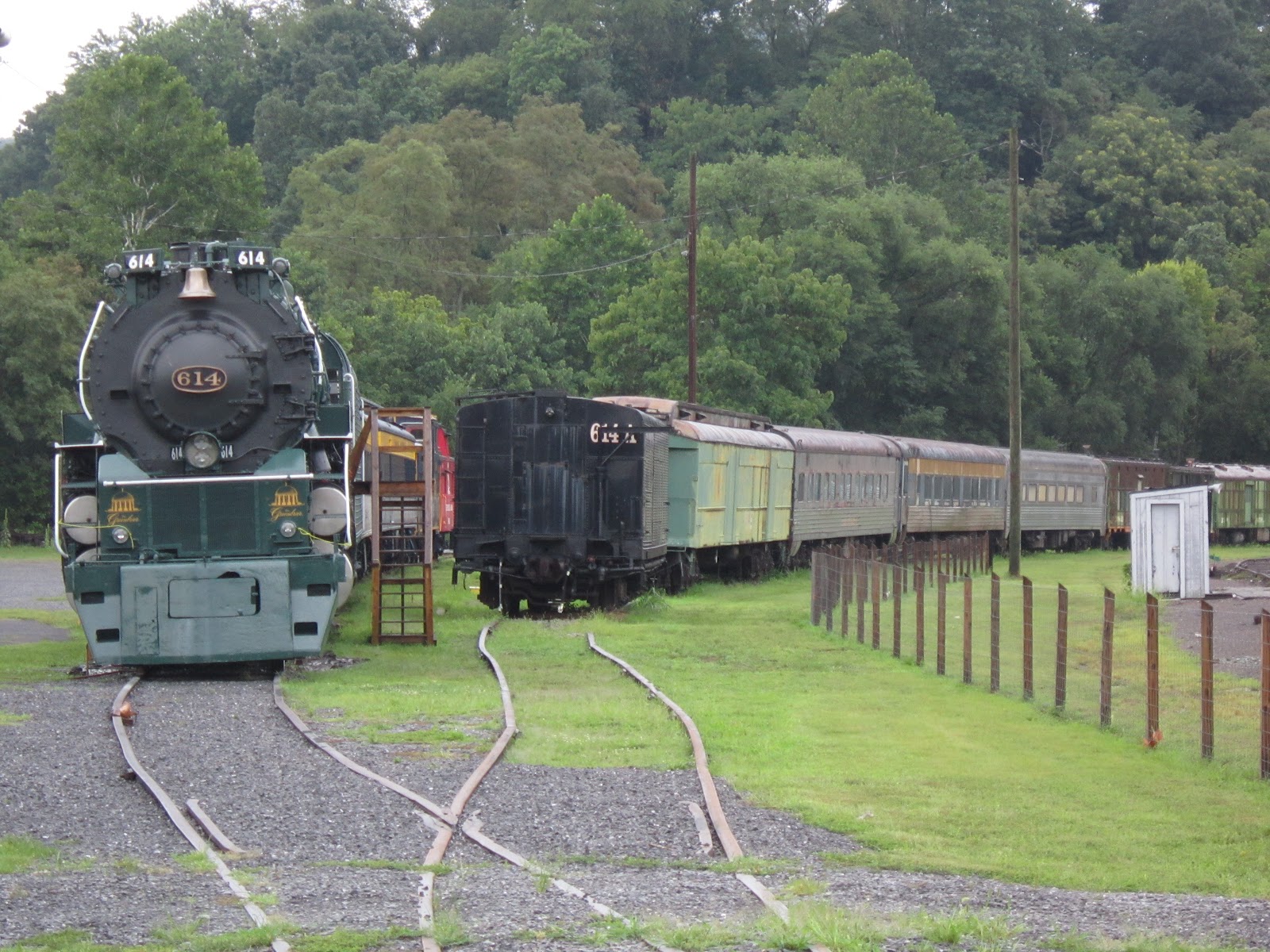
An Encore at the C & O Museum - 45 Years Later
The last day of the WV
Forestry and Rail project began on a rainy note with water testing on the
Greenbrier River at Site no.3, 37.47° N and 80.23 ° W. Of the three test sites on the Greenbrier, it is
the furthest downstream. This part of the Greenbrier River has an island and is
wider than at the other two sites.
The same tests were
conducted as at the other sites with very similar results. As the chart below
shows, the water tested to be of fair quality.
Water Quality (Q-Value) Calculation
|
Test
|
Q-Value
|
Weight
|
Weighted
Q Value
|
|
DO 5.8
|
3
|
.32
|
.96
|
|
Temp 24.9
|
25.4
|
.19
|
4.83
|
|
TDS 87.9
|
80.
|
.13.
|
10.40
|
|
Turbidity 125.2
|
61
|
.15
|
9.15
|
|
pH 7.3
|
95
|
.21
|
19.95
|
|
|
Overall
|
Quality
|
45.29
|
Water Quality Scale
|
91-100
|
Excellent
|
|
71-90
|
Good
|
|
51-70
|
Medium
|
|
26-50
|
Fair
|
|
0-25
|
Poor
|
The last official event of
the trip was a stop at the C & O Museum in Clifton Forge, VA http://www.cohs.org/ This museum was established to preserve the history of the C
& O railroad in Virginia, West Virginia, and Kentucky. This railroad was
crucial to the Appalachian region for transportation, employment, and communication. The museum documents the people, facilities, and machines that fulfilled those roles.
The pictures above show one of the last steam locomotives used by the railroad. It has been maintained with the idea of running excursions from the east coast to the Greenbrier Resort, and is named the Greenbrier. The resort was once owned by the C & O Railroad. This locomotive weighs 462,000 pounds and could hold 26,000 gallons of water. As it travelled and depleted its water supply, firetrucks from local communities would refill it because water towers were no longer part of the railroad infrastructure.
Until 1967 trains included
dining cars like the Gatsby Tavern, shown in the photos above, that offered
passengers food without interrupting their journeys. This dining car is still fully
functional and is used for special events like rehearsal dinners, birthdays,
and other special occasions. We had lunch served in the car during our visit to
the museum. It was a special encore visit for me since I had eaten in the
dining car while it was still in regular service on the George Washington in
1967. This happened when I was sixteen years old and travelling to Washington
DC with my high school band to march in the Cherry Blossom Festival.
Our visit to the C & O
Museum continued with a visit to the Exhibit Hall that contained memorabilia
from the various communities that the railroad served and the services that it offered.
This included the kitten icon used by the railroad to advertise its Pullman Car
service and the motto, “Sleep like a kitten”. This icon was painted on all its
cars and was familiar to everyone who had waited at a railroad crossing for the
train to pass. Our visit ended with a fun ride on the museum’s model railroad
that people could sit on and travel around the museum grounds.
Saturday, July 21, 2012
The Durban Rocket
The fifth day of the WV forestry
and rail project began with a trip to Gaudineer Forest near Snowshoe Resort http://www.wvencyclopedia.org/articles/2092 .
This was a small patch of virgin forest that was not logged earlier due to a
surveyor’s mistake. This was a deciduous forest with some red spruce, unlike
Cathedral State Park which is a hemlock forest with some birch trees.
There is a very significant
difference in the undergrowth in the two forests. Cathedral State Park http://www.cathedralstatepark.com/ has only
a few plant species present, primarily ferns and rhododendrons. As the photo above shows, Gaudineer Forest
has a much more diverse undergrowth with ferns, grasses, vines, and shrubs. As with any old growth forest, there are numerous species of fungi present recycling nutrients. The
pH of the soil in each was around 4.5, but Gaudineer Forest was far wetter.
This is why it is the home of the Cheat Mountain salamander, found only in this small forest and nowhere else. It also allows slime molds to inhabit the area, unlike Cathedral.
http://www.wvdnr.gov/wildlife/magazine/Archive/05Summer/wildlife_diversity_salamander.shtm
The afternoon began with
water quality testing at site number one on the Greenbrier River. The water was
tested again for dissolved oxygen, total dissolved solids, temperature, pH, and
turbidity using the water quality index developed by the National Sanitation
Foundation. https://www.dropbox.com/sh/m4x5mwyriag1ibf/KHS_eBFvOb/WaterQuality.pdf. The results listed below show the water to be in the fair range.
Water Quality (Q-Value) Calculations
|
Test
|
Q-Value
|
Weight
|
Weighted
Q Value
|
|
DO
7.0
|
6.67
|
.32
|
22.08
|
|
Temp
25.6
|
|
.19
|
4.90
|
|
TDS 28.9
|
85
|
.13
|
11.05
|
|
Turbidity 44.2
|
46
|
.15
|
6.90
|
|
pH 7.5
|
95
|
.21
|
19.95
|
|
|
Overall
|
Quality
|
44.8
|
Water Quality Scale
91-100
|
Excellent
|
71-90
|
Good
|
51-70
|
Medium
|
26-50
|
Fair
|
0-25
|
Poor
|
The afternoon was spent on the Durban Greenbrier Valley Railroad http://mountainrailwv.com/choose-a-train/durbin-rocket riding the Durban Rocket. The Durban Rocket is pulled by a Climax locomotive shown above left http://gearedsteam.com/climax/climax.htm that makes a daily run of 5.5 miles along the Greenbrier River and back again. The Climax locomotive is similar to the Shay locomotive in that it is geared and was also used to transport logs. This Climax locomotive is one of only three still in operation anywhere in the world.
Subscribe to:
Comments (Atom)